On Waterproof Inks
07 March 2026
new ink, notepads
returning to scribbling
new story awaits
Except for a few poems, it’s been over a year since I’ve written by hand. My writing time has been spent living at the computer, discovering, sculpting, editing the novel. While that book is out looking for someone to champion it, a new story has bubbled up.
I am one of those writers who feels first drafts need pen to paper, rather than fingers to keyboard. The process is more thoughtful and brings an extra “something” that brings creativity to the fore. In fact, recent neuroscience studies show that handwriting engages more of the brain than typing does.
As I may be writing in coffee houses again, the chosen ink needs to be waterproof against the inevitable liquid spill. While my steady-freddy is always Pilot Blue-Black, I wanted a stronger water-resistant ink to begin with. When I opened my neglected bottle of Sailor Seiboku, all that remained was a thin layer of dried ink. There was very little Seiboku left in the bottle. Living in the high desert, ink will evaporate if left in a pen or bottle for too long. Living at 7,000’, “too long” can be a few weeks or a year. Time for a new bottle, ay?
My fountain pen friends know about water and ink, but in case you don’t, this post is for you, stranger-friend.
Here’s a comparison of Pilot Blue-Black, Sailor Seiboku, and my favorite Aurora Turquoise:
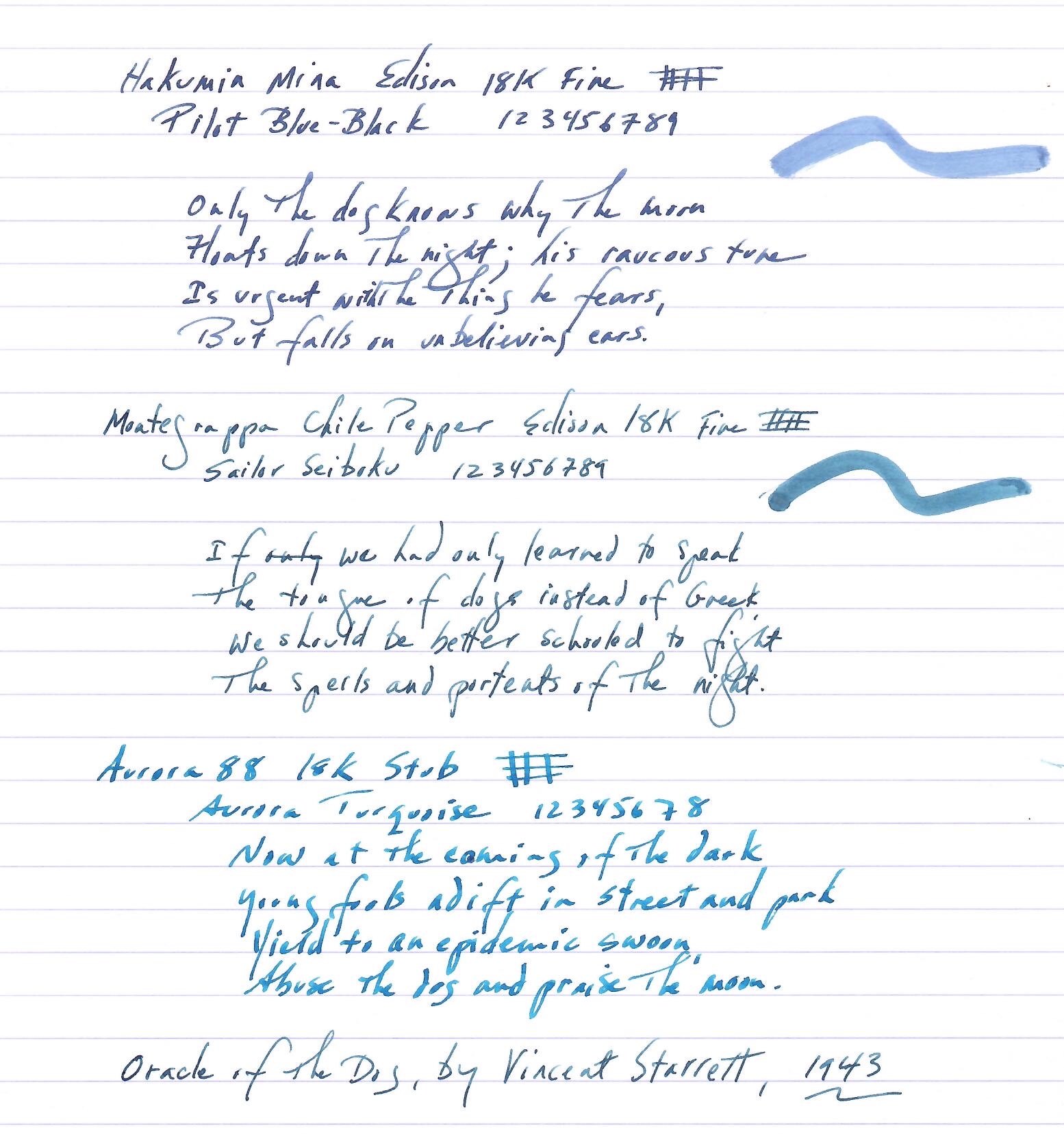
The cheery ink designation belongs, of course, to Aurora Turquoise. Alas, that ink is not waterproof. Pilot Blue-Black is flat and plain. Seiboku has a bit of shading, even using a fine point nib.
A light water splash across the page reveals which ink is legible afterwards. Both Pilot Blue-Black and Sailor Seiboku outrank the beautiful Aurora Turquoise in surviving a liquid spill. Sailor Seiboku alone remains unscathed by the water.
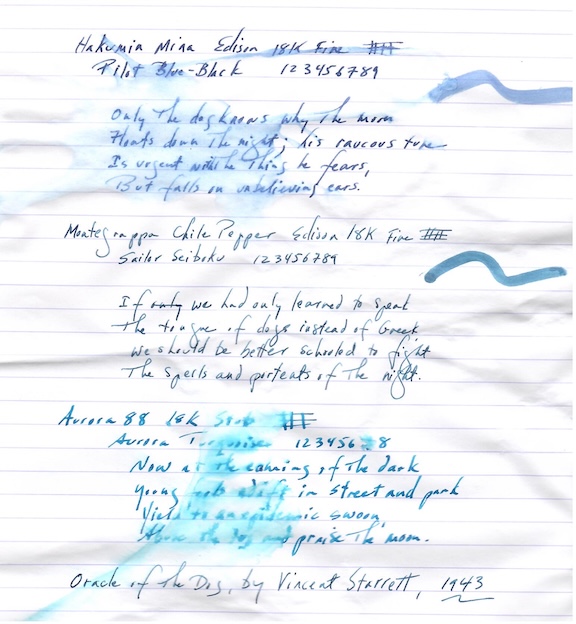
Last year, I made a grave mistake using the Aurora Turquoise to write a letter. It arrived during a New Mexico rainstorm that delivered all our rain at once. The letter got wet and rendered unreadable.
The average fountain pen ink is dye-based. That means, the ink is water-soluble and makes pen cleaning an easier task. A pigmented ink, such as Sailor Seiboku, is water resistant and permanent on the page. Because of those pigments, the ink can’t be left in an unused fountain pen for weeks at a time without clogging the feed and potentially damaging it. As a dye-based ink, Pilot Blue-Black is remarkably water resistant. The ink contains no pigments and none of the same risks as Sailor Seiboku. Dye-based inks are also prone to fading over long periods of time, perhaps decades, unless you leave your pages constantly in the sun.
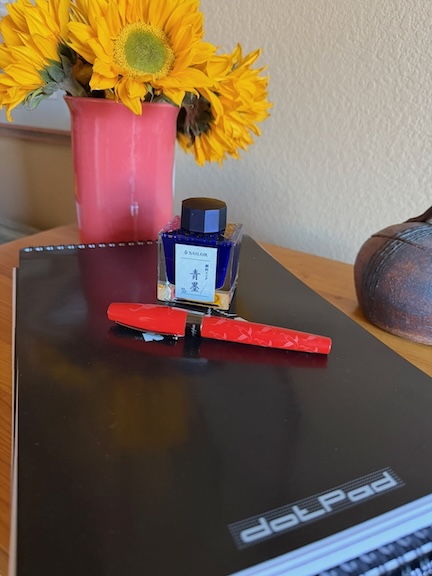
My fountain pen of choice to begin drafting is my Montegrappa Chile Pepper. A gift to me from my beloved wife, the pen was a limited edition sold by Santa Fe Pens in celebration of the store’s 21st anniversary. The Chile Pepper pen is a fitting choice—the new story is set in New Mexico. More to be revealed as I write along.
featured photo: Montegrappa Chile Pepper fountain pen
And yes, we spell the word as “chile,” not chili, in New Mexico.